Which Pets Panic at Vacuums? Dogs, Cats, Birds, More
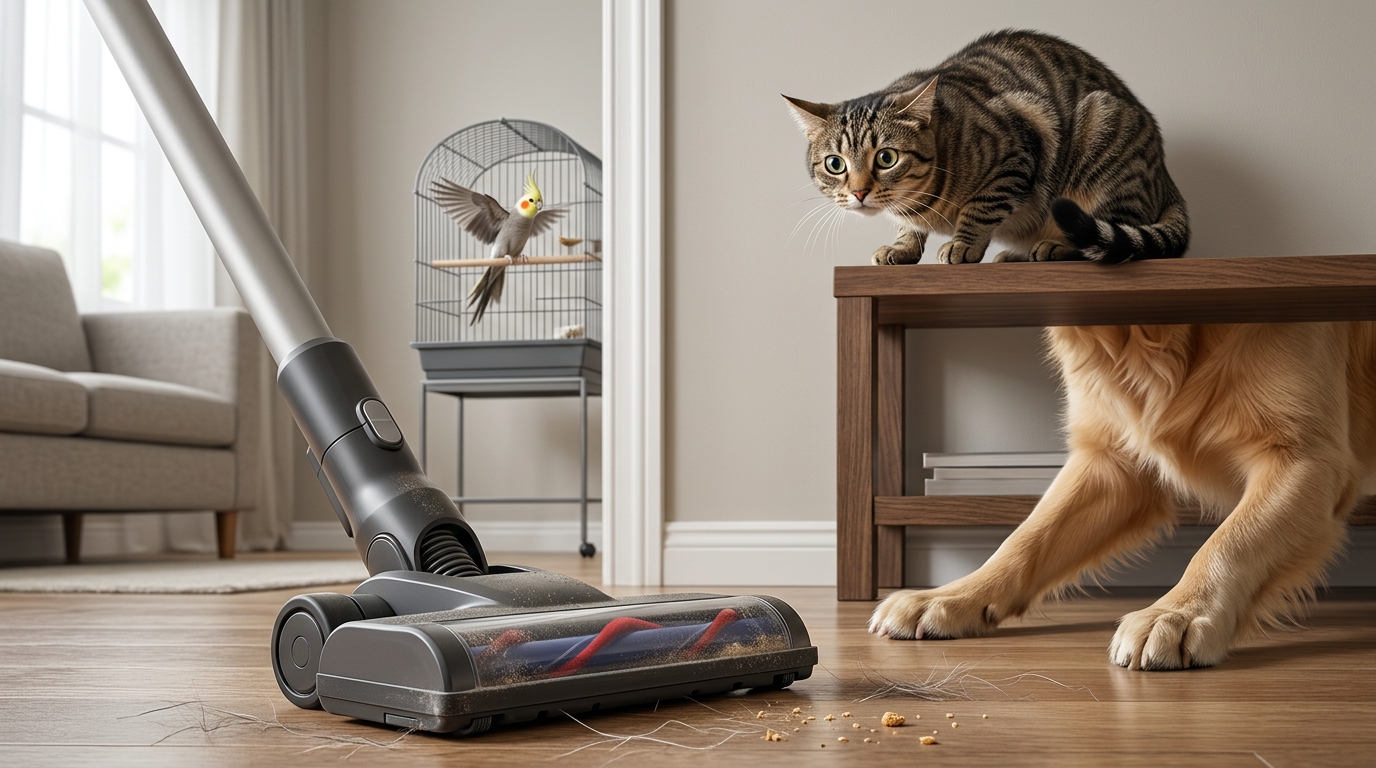
What kind of pets freak out with vacuums?
Pets that “freak out” around vacuums are usually the ones that are more noise-sensitive, motion-sensitive, or naturally cautious about sudden changes in their environment. The vacuum is a perfect storm: it’s loud, it moves unpredictably, and it can change smells and airflow in a room within minutes.
Dogs that are noise-sensitive or high-alert
Many dogs react strongly to vacuums, especially herding breeds and vigilant watchdog types that are wired to track movement and respond to “threats.” Puppies can also be more reactive because they haven’t learned what the vacuum is yet. Common signs include barking, lunging, circling, or trying to “attack” the vacuum to make it go away.
Cats that are skittish or dislike sudden movement
Cats often bolt and hide when the vacuum comes out. Timid cats, recently adopted cats, and cats that prefer routine are more likely to panic, especially if the vacuum is introduced without warning. Some cats also react to the change in scent after vacuuming and may avoid the area for a while.
Small mammals and birds with strong startle responses
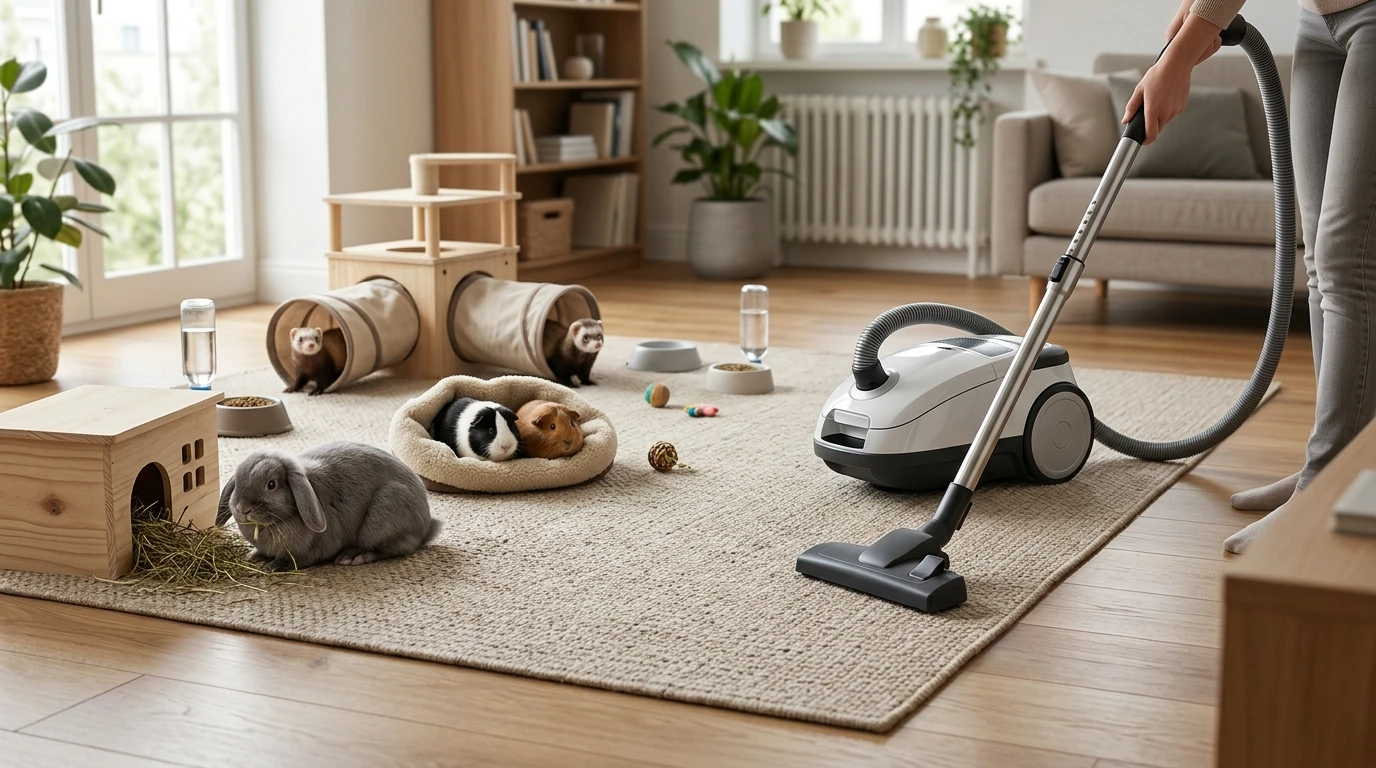
Rabbits, guinea pigs, hamsters, and many pet birds can become extremely stressed by vacuum noise and vibration. These species are often prey animals by nature, so a roaring, approaching object can trigger a fear response quickly. If their enclosure is on the floor or near the cleaning path, the intensity can be even higher.
Pets with past negative experiences
Any animal that has been startled, chased accidentally, or cornered during cleaning can develop a learned fear of the vacuum. Once that association is formed, the sight of the vacuum alone (even before it turns on) can cause hiding, shaking, or agitation.
For a step-by-step way to reduce these reactions safely and steadily, see the full guide here: 2-week plan to help pets stay calm around vacuuming.
FAQ
How can I help my pet stay calm during vacuuming?
Create distance and a safe retreat (another room, covered crate, or high perch), then gradually desensitize with short, low-intensity exposures paired with treats. Consistency matters more than forcing a full cleaning session all at once.








Leave a comment