How to Vacuum Without Stressing Rabbits, Guinea Pigs & Ferrets
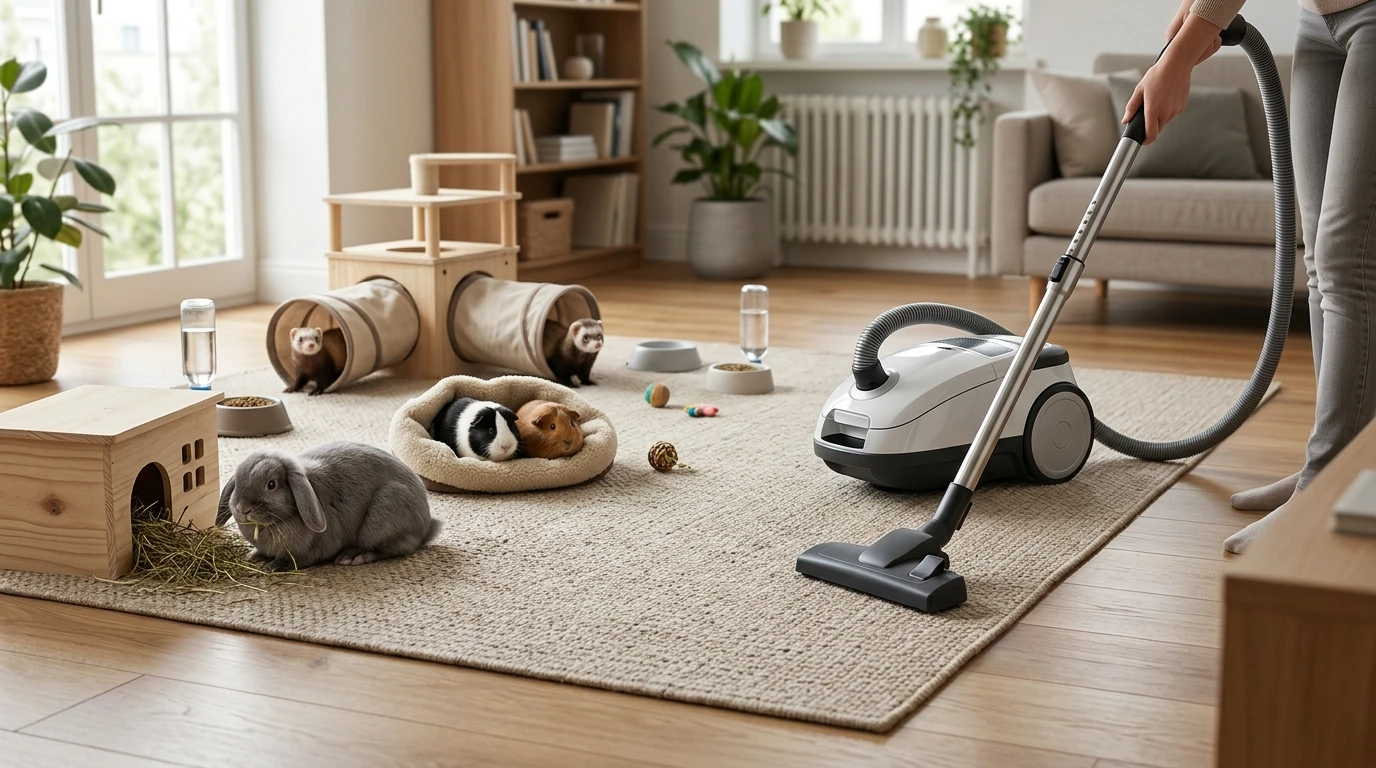
Do small pets like rabbits, guinea pigs, or ferrets get stressed by vacuums?
Yes—many small pets can get stressed by vacuums. Rabbits, guinea pigs, and ferrets have sensitive hearing and often interpret the sudden roar, vibration, and fast movement as a threat. Even if they don’t panic every time, repeated exposure without a plan can raise their baseline anxiety and lead to hiding, freezing, thumping (rabbits), teeth chattering, rapid breathing, or frantic cage running.
That said, stress levels vary a lot by individual temperament, how close the vacuum gets, and whether the pet has a safe place to retreat. A confident ferret might just avoid the area, while a prey animal like a rabbit may startle more easily. Very young, elderly, or newly adopted pets are also more likely to react strongly.
What vacuum stress looks like in each pet
Rabbits: bolting to a corner, thumping, wide eyes, refusing food afterward, or staying tense long after the noise stops. Guinea pigs: prolonged hiding, squealing, startled jumping, or reduced appetite. Ferrets: darting away, agitation, or trying to “attack” the vacuum as a noisy intruder.
How to vacuum without overwhelming them
Start by increasing distance: keep the vacuum out of the room whenever possible and close doors to reduce noise. Provide a covered hide (a box, tunnel, or fleece “cave”) so they can feel protected. If your pet lives in an enclosure, move it to a quieter room before vacuuming, or vacuum in short bursts while the pet stays fully covered and undisturbed.
If vacuuming near them is unavoidable, keep the nozzle away from the enclosure, avoid sudden direction changes, and don’t “chase” stray hay or bedding right next to their space. Pair the sound with something calming: a favorite treat after the vacuum turns off, or a scatter of forage in their hide so the noise predicts something positive, not danger.
For a step-by-step approach that builds tolerance gradually, use this practical plan: guide to help pets stay calm around vacuuming (2-week plan).
FAQ
How can I make vacuuming less scary for my pet without moving them?
Create a covered “safe zone” (box or tunnel), vacuum in brief passes farthest from the enclosure first, and keep the nozzle away from their walls so the sound and vibration are reduced.










Leave a comment