Emotional Intelligence for Preschoolers Who Won’t Talk
How do you introduce emotional intelligence activities to a preschooler who resists talking about feelings?
Start by taking pressure off the “talk about your feelings” request. Many preschoolers resist because the question feels big, confusing, or like a test. Emotional intelligence can grow through play, routines, and simple choices—without requiring long conversations.
Answer
Begin with nonverbal, low-stakes activities that let your child participate without having to explain themselves. Use quick “point and pick” options, playful labeling, and modeling in everyday moments.
Try “feelings without talking” activities
1) Face matching game: Print or draw a few faces (happy, sad, mad, scared, calm). Ask, “Which face looks like how your body feels?” Let them point.
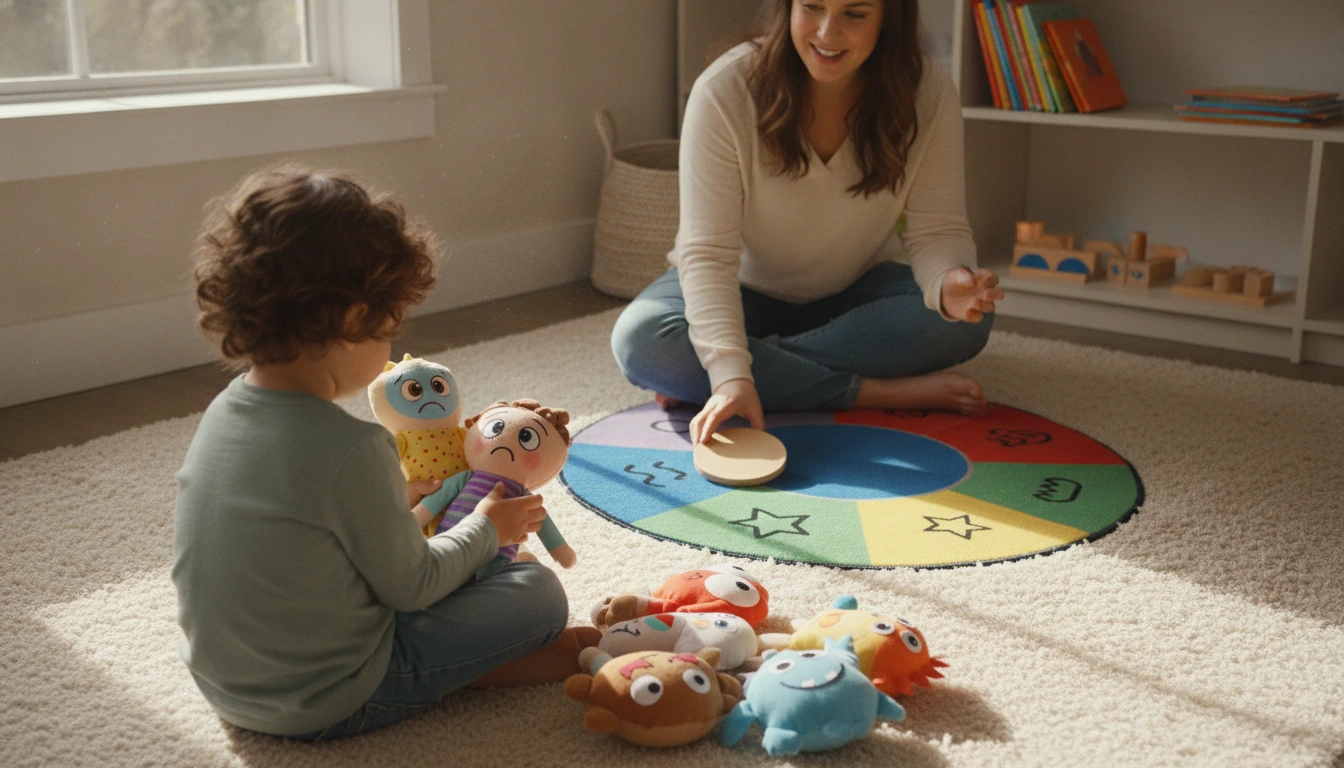
2) Stuffed-animal role play: Have a toy “feel” something: “Bunny is mad his block tower fell.” Then ask, “Should Bunny stomp, hug, or ask for help?” Kids often answer for the toy before they’ll answer for themselves.
3) Color check-in: Use colors instead of words (green = okay, yellow = wiggly, red = upset). At transitions (leaving the park, bedtime), ask for a color.
Model the language in tiny doses
Narrate your own feelings briefly and neutrally: “I’m frustrated. I’m taking a deep breath.” Keep it short, then move on. This shows feelings are normal and manageable.
Validate first, problem-solve later
If they shut down, reflect what you see: “Your face looks tight. Something feels hard.” Offer two comforting choices: “Do you want a hug or space?” Once they’re calm, add one skill: “Next time, we can say ‘help’ or squeeze your hands.”
Keep the goal small and consistent
Aim for one moment a day: one label, one choice, one calming tool. Over time, familiarity reduces resistance.
For more step-by-step ideas and examples, visit the main article.
FAQ
What are simple self-regulation tools for preschoolers?
Try “smell the flower, blow the candle” breathing, a tight-squeeze then release of hands, or a calm-down corner with a soft toy and a book. Practice when your child is calm so it’s easier to use when they’re upset.










Leave a comment