Dog Travel Essentials: Safety, Comfort, and Cleanup
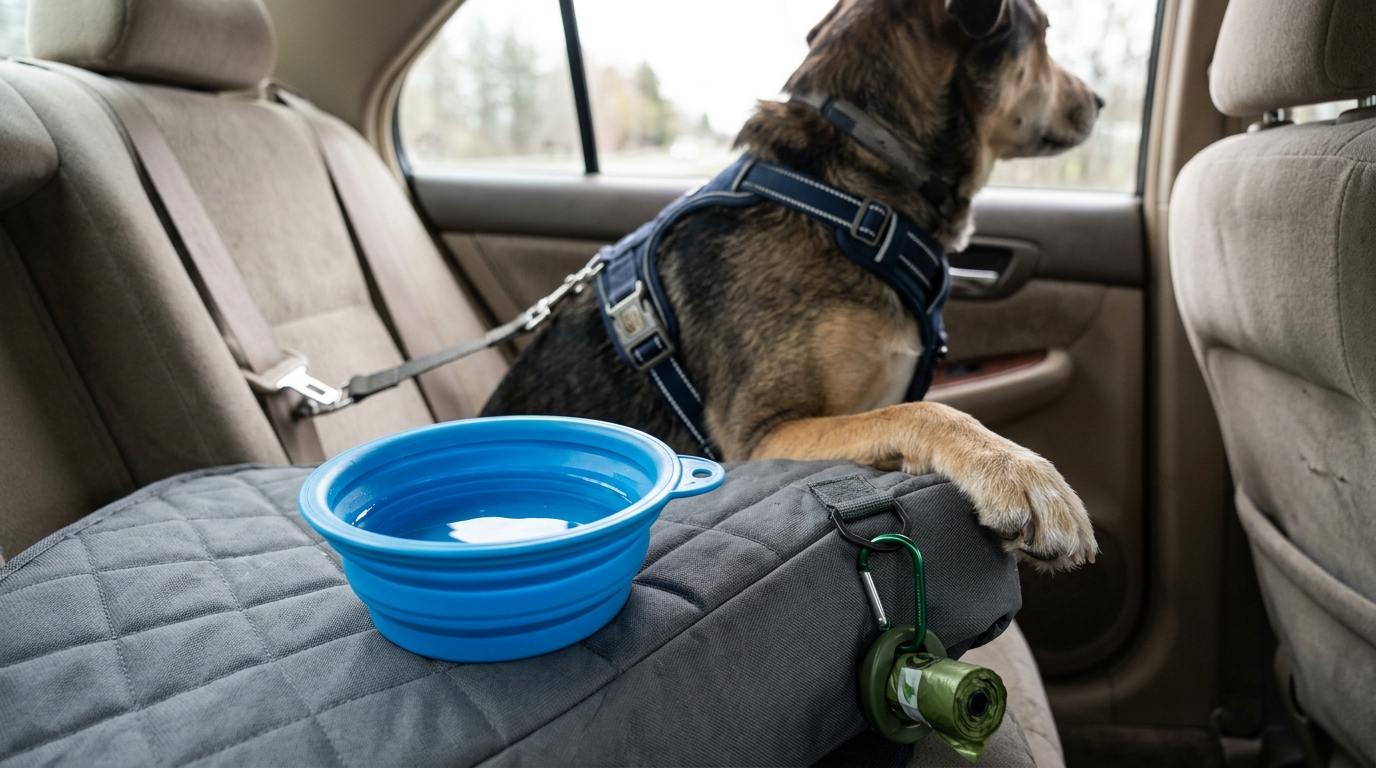
What essentials do dogs need for travel?
Traveling with a dog goes smoother when you pack for safety, comfort, and routine. Start with the basics: a secure restraint, reliable ID, food and water, and a small first-aid kit. Then add the items that keep your dog calm and clean on the road, whether you’re driving across town or flying across the country.
Safety and identification
A crash-tested car harness or a well-ventilated travel crate helps keep your dog secure and reduces distractions. Make sure your dog wears a collar with an ID tag that lists a current phone number, and consider a microchip if they don’t have one. Carry recent photos of your dog on your phone in case you need them for identification.
Food, water, and feeding supplies
Pack enough of your dog’s regular food for the entire trip plus an extra day, since sudden diet changes can upset stomachs. Bring a leak-resistant water bottle or travel bowl, and offer water at regular stops. If your dog takes supplements or prescription diets, keep them in original packaging for easy reference.
Health items and paperwork
Bring any medications your dog takes, along with dosing instructions. A compact pet first-aid kit is useful for minor issues like small cuts or paw irritation. If you’re traveling far, keep your vet’s contact information handy and consider carrying vaccination records, especially for lodging or boarding requirements.
Comfort, cleanup, and routines
Include a familiar toy or chew to reduce stress and provide a positive distraction. Pack waste bags, paper towels, pet-safe wipes, and an enzymatic cleaner for accidents. A leash, backup leash, and a portable tie-out (where allowed) can make breaks easier and safer.
For a more detailed checklist and trip-planning tips, visit the full guide on dog travel essentials.
FAQ
How do I keep my dog calm during a long car ride?
Take short practice drives, keep the cabin cool, and schedule frequent breaks for water and bathroom time. A familiar toy or chew can help, and feeding a light meal a few hours before departure may reduce nausea.






Leave a comment